
Chapter III
In Which Britta Jensen, Author of 'Orphan Pods,' Talks Liminal Identities & Creating Community Around the World
I wrote my first baby novel in fifth-grade to win a bet. (Because of course I did.) Since then, I’ve kept it up through newspaper articles, blog posts, terrible fanfic and short stories. I even dabbled in grant writing.
But even with all of those different forms and formats, I’m a writer. I write. The artists who really fascinate me are the ones who write a bit, then illustrate their books, and then write a song or two to, you know, really get the feel of a scene.
Meanwhile, that’s me over there, with my mind blown.
If you haven’t guessed from this introduction, Britta is one of those mind-blowing, multitalented artists. She’s lived all around the world, gathering countless amazing artists in her wake. And for the past three years, she’s helped get my novel, Hameln, in publishing shape. Truly magical.
I’ve edited our conversation below for clarity and length.
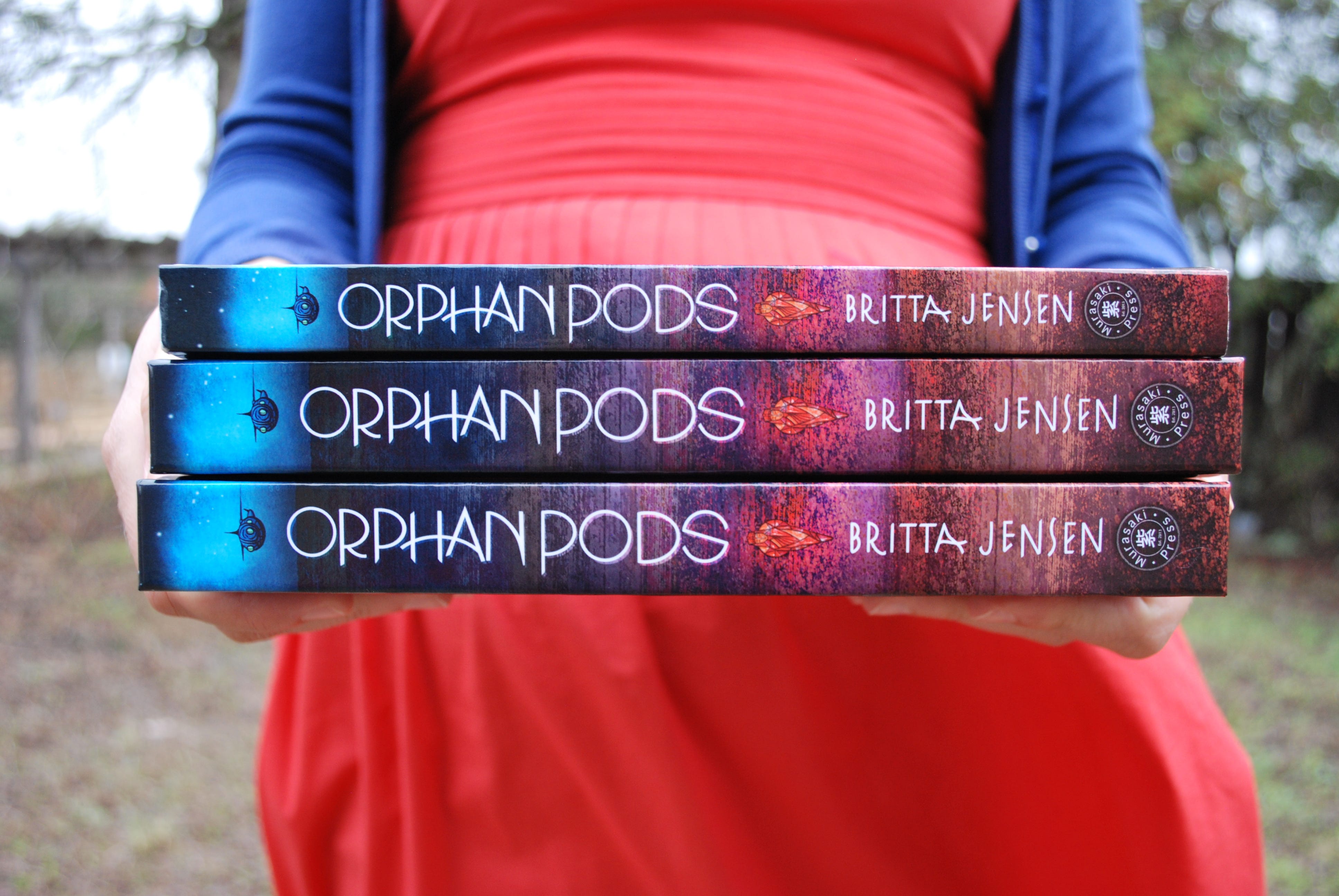
Nancy: One of the reasons I find you so impressive as an artist is that you’re multitalented: a writer-singer-dancer-painter-musician. And in your writing, you'll often have elements of music.
Britta: I think in my young life, I was definitely kind of dancer-singer first, writer second. And a lot of that was just the cultural stigma surrounding writing. For me growing up, you had to be really super talented in the arts to make any money doing anything. You had to understand grammar really well. All these things, of course, are false. I think you do have to have some talent, but you really have to have a lot of drive, a lot of willingness to learn. Because I grew up bilingual, I found that I made a lot of mistakes in my writing, particularly academic writing. I just kept getting the same feedback from professors who were like, “Hey, you're a talented writer, but it's clear that you speak other languages right?” And I was like, “Ooh, okay …”
Nancy: Wait, is that a bad thing?
Britta: Yeah, I thought, this is not going to be the calling for me. And I think because I grew up in Japan where you choose your trade pretty young, and that's what you're going to do the rest of your life. And if you don't like it, too bad, because that's what you chose.
Nancy: Yikes forever.
Britta: There wasn't that flexibility with the way that I was raised about, “Oh, you can change your mind.” I grew up with a mother who's a professional musician. I had to take all the Royal Schools of Music exams. I love the singing. I love, you know, playing instruments—although I would say singing is probably my only place of proficiency. I can play the piano, but I'm not good.
Nancy: It makes me feel like we're in the Regency era. “Ah, yes, was taught how to paint, but that's not my strength.”
Britta: Actually, yeah, very much. I love drawing, but I don't think I'm particularly good at it. It's just relaxing for me—
Nancy: I've got a Christmas present that begs to differ. [Ed: Yes, she gave me a painting. The present I gave her was not so exciting.]
Britta: Well, thank you!
I think, if I was going to say what my primary artistic vessel is, it’s definitely still writing, and it always was.
Nancy: When you're getting inspired, let’s say you're singing, do you think, “Oh, this would be great in my book!” or “I should paint this!” And what does that feel like? I find the whole thing to be magical.
Britta: I mean, thank you for thinking this is magic, because to me it feels like madness! I can't write about a place unless I've drawn it. Like, oh, what is this in my brain? Okay, let me draw it.
Nancy: One of the things I found interesting when I was reading Orphan Pods is insider/outsider identity. Both of your main characters have an identity that they grew up with and then they're either thrust into or put themselves into a different culture or group that raises questions about identity and how you see yourself versus how others see you. For instance, you don't see yourself as a white woman because of the way you were raised. In the culture that you grew up in, you saw yourself as a foreigner. Does that differ from how others see you, and does that ever shake your identity?
Britta: Oh yeah, absolutely. It's interesting, in the United States and England, particularly, we very much love to put people into categories. And if you don't fit in a category, like you said, there's this very outsider feel. I think because my family moved to Japan when I was ten, we already were outsiders for a variety of reasons. It meant that when we moved to Japan, it planted in my young ten-year-old brain learning Japanese, “Oh, foreigner, foreigner, foreigner, that's what I am.” And then when we came back to the States for a short stint, and then went back to Japan again, I really felt like a foreigner.
I remember my dad being so excited, “Finally we're back in the States. We're back to our own country.” And we as kids are like, “What's that?” And then suddenly we go back to Japan, and it's like we never left.
Nancy: Clearly that's not what your parents purposely intended, but that's just the way that it ended up.
Britta: And I think there's a lot to be said about that experience of me going back and forth between the U.S. I went to school in New York City. I think New York City is probably the only place where me being a foreigner didn't matter. I felt like there was only probably a handful of times where, because I lived in a primarily Spanish neighborhood my entire time there. Like a couple of times folks would have, you know, call out to me thinking I was somebody that I wasn't. And then I would just speak back to them in Spanish and they responded, “Oh, okay. Everything's fine.”
My grandfather, my dad's dad, spoke Spanish fluently because he was an FBI agent, but he was Danish. So there's kind of this Danish, a little American, a little bit German because of that long stint I had in Germany, and definitely very Asian sides of me. I'm definitely a mix of cultures.
Nancy: You're a chameleon.
Britta: And then, of course, marrying into a very Mexican family, in which I have to speak Spanish entirely with Joaquin's family. Only a few nieces and nephews speak English. There's that code switching that happens. And to me, it feels pretty natural. I think the only time I get my hackles up is when anyone from any culture, any language just doesn't try to understand a different side. If they claim that their culture is the most important, it doesn't matter who they are, I just feel really annoyed.
That's probably where I get, you know, a little frustrated. I think what ended up happening with my writing, how that bled in, was definitely that it made me want to create cultures that were that same amalgamation that I experienced myself. It was very unconscious. I don't think at any point I was thinking, “Oh, let's throw in a little Japanese this, and a little this of that.”
Nancy: I think that's important right now, because there are many forces that are trying to define things in very black-and-white terms in a way that some would call nostalgic, but I feel like it never really existed. It's like when people learn there were Black Romans. Black people have always been everywhere because humans travel, right? We're always exploring. That's one of the key features of being human. Your identity and your experiences, while they might seem incredibly new and unfamiliar to me, I feel like other people would see it as normal.
Britta: What you're saying reminds me of when I went to Senegal. It was my first time ever on the African continent. And to be there in West Africa and feel really loved by my cousin's husband's family, and for them to be like, “You're family.” I think that's like the moment where I was able to kind of give up some of the cultural chips that I had on my shoulder.
Nancy: I come from a place where everyone knows my family. Leaving home and realizing that there are people out there that don't know me felt very freeing. What is that like when you go into places instead where people are making assumptions about you that are not true?
Britta: Oh, it would be a little stressful. I would say in my younger, much younger years, I really didn't like going into new settings. My dad, when I was very, very young, told me “Don't speak Japanese in public. People are going to be prejudicial towards you.” But I'd been speaking Japanese and English mixed for twelve years.
So I've migrated towards more bilingual environments as a result of it just feeling more comfortable. I want to be an environment where I feel accepted. Sometimes there's a little bit of stress because I'll do something that's very, very Japanese. And if someone doesn't know me, they don't understand. And so I've learned to just introduce that German over-explaining side of myself. When you come over, unless you understand that I grew up in Japan, I'm going to offer you food three times, and you have to refuse three times for me to give up and not give it to you. Nothing is going to undo that cultural thing that is ingrained in me. I'm going to try to feed you. If you don't like it, that's okay.
Nancy: Who do you hope finds “Orphan Pods,” and what do you want them to get out of the book?
Britta: Of course, it's written for teens. But I'd like a combination of teens and adults, ideally families that have kids of like twelve and older, reading it. And to just have a feeling of hope. I try to write hopeful things, but not in a way that's too twee, or saccharine.
Nancy: That's just not going to resonate with many people at this point of time.
Britta: Exactly. But I really feel like I would love for trauma survivors to read it and feel like there's hope for them. As someone who has survived trauma, I want them to feel like, “Okay, I'm not alone. I can also, like these characters, transcend difficult things.” And then if it appeals beyond, great.
It’s for people who love love stories, action adventure, and a little bit of science fiction. Like in many ways, my stuff is super light science fiction. I'm using science fiction to communicate story.
Nancy: Sometimes if you write in a more realistic setting, it can become too after-school special, right?
Britta: Absolutely. I think for me, it's again, it's something that is very not intentional. It's just that my brain is thinking in that world. It's just like I see it in my mind, and I'm like, “Oh, that's the city. Oh, they have hoverboards. Oh, they have electrocoil whips!” The other day Kara [Lenore] told me, “I want my hoverboard now, and I want my electrocoil whip!”
Nancy: And you had to say, “Sorry, I don't actually have the science. I just have the vibes.”
Britta: Exactly.
Nancy: What are you working on next?
Britta: I have already started working on the sequel—actually the two sequels—after this one. There's going to be Bones of Our Ancestors, and it's an adult novel.
Nancy: Oh, so your book is growing up with your audience.
Britta: It is. Orphan Pods is probably my last YA novel for a while, and then the sequel to that is The Three Goddesses.
Nancy: I love that title.
Britta: Oh, thank you! It's going to be The Three Goddesses series. We've got one of the goddesses that features in a very, very cameo role in Orphan Pods. She'll have a much bigger role, along with two other goddesses, in Bones of Our Ancestors and then The Three Goddesses is going to have some magic, actually.
Nancy: I was going to say it, it sounds like you you're mixing your magic with your sci-fi, and I for one cannot be more excited about that.
Britta: I'm breaking all these rules. Are they going to let me? I don't know.
Nancy: Who is “they”?!
Britta: The genre police are going to come get me!
Nancy: Let them come!
Britta Jensen's debut YA novel, Eloia Born, won the 2019 Writer's League of Texas YA Discovery Prize and was long-listed for the 2016 Exeter Novel Prize. She’s also written Hirana's War and Ghosts of Yokosuka, as well as short stories in Mixed Bag of Tricks, The Castle of Horror Anthology and others. Her stories explore themes of persevering through disability, parental separation, and the intersection of love and various cultures on new worlds. You can find Britta in Austin at ColtsFest later this month, and the Orphan Pods book launch on April 26. Online, she’s at britta-jensen.com.
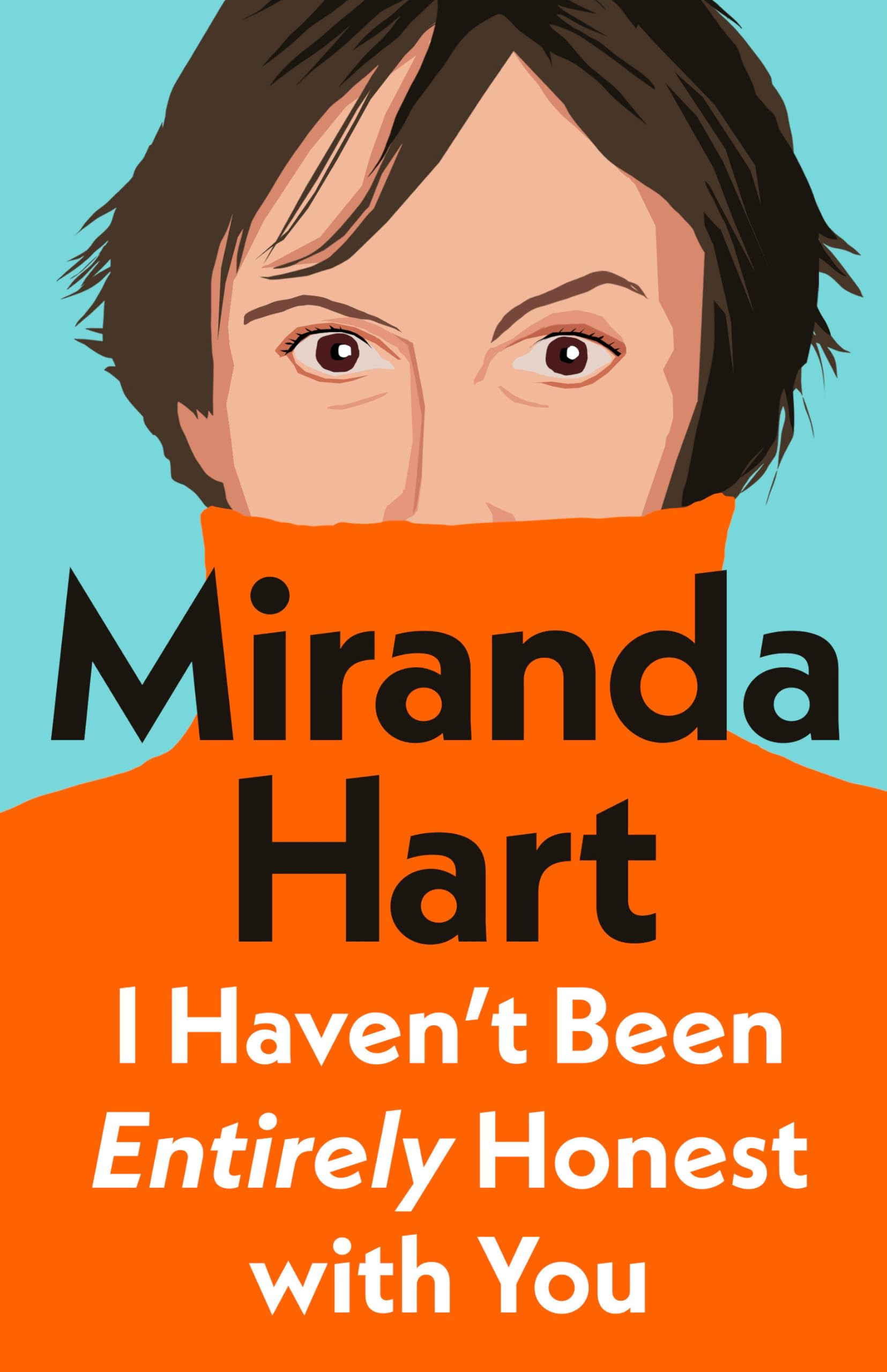
Britta’s One More Thing: It’s Three Things!
“For the one thing inspiring me right now, it's actually three things:
Miranda Hart's I Haven't Been Entirely Honest With You;
and of course, Brazilian Zouk!”